Home
Home
Key Takeaways
- HR systems can hold personal information that many SMEs overlook.
- Payroll, identification, leave, claims, and attendance records need controlled handling.
- Vendor security practices influence employee trust.
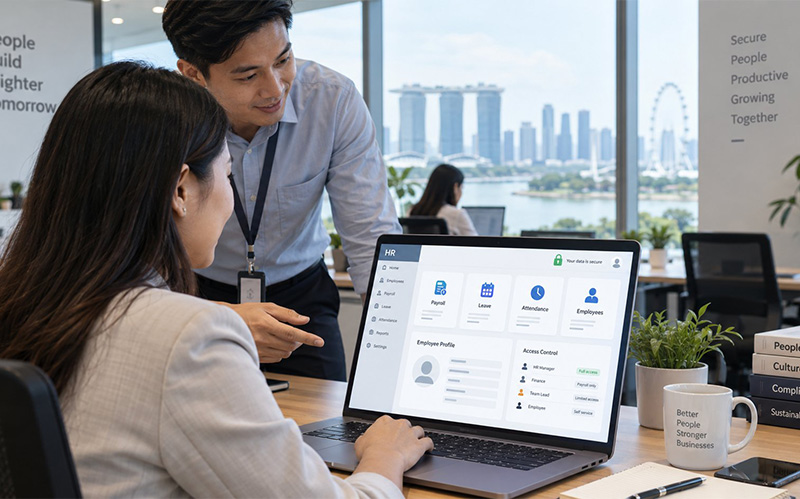
- Role-based access helps people see what they need without exposing unrelated information.
- Data protection should shape HR software decisions before implementation.
Introduction
For growing SMEs, choosing an HR platform often starts with reducing payroll admin, speeding up leave approvals, and replacing scattered spreadsheets. Yet employee data protection deserves equal weight. HR systems bring together personal and sensitive information. If it is handled poorly, a convenient tool can create a business problem.
Singapore’s Personal Data Protection Act sets requirements for how organisations collect, use, disclose, and protect personal data. The PDPA’s data protection obligations include accuracy and protection requirements for employee records. As headcount grows, so do identification, work pass, payroll, and employment records. System choice becomes part of responsible HR management, not simply an IT purchase.
HR Tools Store More Sensitive Employee Information Than Teams May Realise
An HR platform can contain NRIC or FIN details, contact information, work pass records, salary history, bank-related payroll details, leave records, claims, attendance logs, appraisal notes, and employment changes. Strong employee information security starts with recognising what sits behind actions such as approving leave, running payroll, or updating a profile.
As SMEs expand, HR staff, payroll administrators, managers, finance teams, and employees may need different access levels. Employee data protection becomes practical when access follows clear responsibilities. Ask whether the system supports role-based permissions, access logs, regular reviews, and prompt permission changes when staff move roles or leave.
Fragmentation matters. SMEs often want to move away from Excel tracking and multiple systems because repeated handling adds work. Using human resources management software can reduce that friction, but consolidation only helps when safeguards are built into how information is accessed and managed.
Payroll, Identification, and Contact Details Need Tighter Handling
Payroll and profile records are not ordinary admin files. Salary, allowances, deductions, bank details, identification numbers, addresses, phone numbers, and emergency contacts affect privacy and trust. A 2026 CNA report on a cyberattack affecting Singapore-based Global Schools Foundation said reported compromised data included salary records, alongside students’ personal information and staff-parent correspondence. Strong HR data privacy depends on keeping these records accurate, current, and available only where there is a genuine work need.
Scattered handling makes that harder. Spreadsheets may be copied, attachments forwarded, and old versions left in shared folders. When information is spread across email, local files, and manual trackers, you have more places to check and more opportunities for mistakes. A well-managed payroll management system can reduce those handoffs by keeping payroll information within a clearer process.
Vendor Security Practices Can Affect Employee Trust
Choosing an HR tool means relying on the vendor’s technology, support, and data-handling practices. Employees may not see those controls, but they feel the impact. They expect personal details, payslips, claims, and employment information to be handled carefully whenever they submit or retrieve them.
Employee data protection also shapes trust. During evaluation, ask practical questions. Can administrators review access? Can permissions change with responsibilities? How are support requests involving employee records handled? A provider should explain its safeguards in clear, practical terms so you can assess how employee information is handled.
The Right HR Tool Should Make Responsible Access Easier
Protection does not mean locking every record away. It means giving each person the access needed for a legitimate task and no more. Managers may need leave or attendance visibility. Payroll staff may need salary information. Employees may need their own payslips, claims, requests, and records. Clear role-based access helps you manage those differences consistently.
This matters for sensitive employee records because informal access becomes difficult to track as a business grows. If permissions depend on shared folders, forwarded files, or workarounds, access can become broader than intended. Providing employees with access through an employment self-service portal can reduce unnecessary HR handling by letting employees reach relevant information directly while keeping other employee data outside their view.
Data Protection Should Be Considered Before Adopting Any HR Tool
Security questions should enter the buying process early, alongside price, usability, modules, support, and implementation. If you evaluate safeguards only after selecting a platform, you may discover limitations when payroll files, employee profiles, and historical records are already being migrated. That can turn a simple rollout into a difficult clean-up exercise.
Put employee data protection on the evaluation checklist from the first vendor conversation. Look at access control, record accuracy, centralised processes, and reduced dependence on scattered files. You need practical features and operating habits that make responsible data handling easier for an SME team.
How OpensoftHR’s AI HR Assistant Supports Safer, Self-Service Access to HR Information
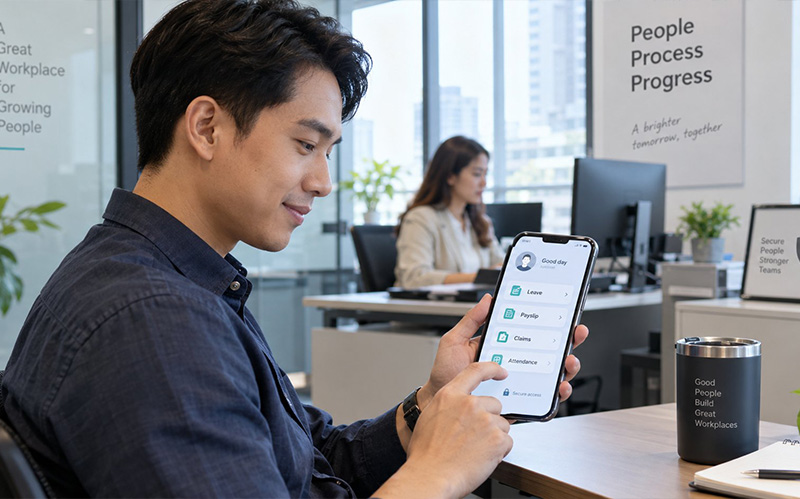
One practical way to reduce exposure is to reduce how often HR retrieves and passes records manually. AIME, OpensoftHR’s AI-powered Employee Self-Service assistant, lets employees check their own leave balances, payslip queries, claim status, and attendance records directly. The safety benefit is narrower visibility: employees reach their own information without HR forwarding records for every routine request.
The self-service model keeps each employee focused on their own information rather than broad HR records. That reduces handoffs through email or shared folders and limits routine HR intervention. For site-based teams in construction, marine, and engineering, workers can get answers on their own devices while their records remain within the system. You can explore AIME through OpensoftHR’s assistant page when assessing whether this approach suits your workforce.
Choose HR Tools That Help Protect Both Data and Trust
Your next HR system should make work simpler without making sensitive information harder to govern. Before you commit, map the records you hold, identify who needs access, review manual handoffs, and ask vendors how their controls support those realities. OpensoftHR brings payroll, e-leave, expense claims, and time attendance into a clearer structure. It also supports performance appraisal, employee self-service, and employee management, helping you strengthen employee data protection as part of everyday HR management.
Speak with us about simplifying payroll, employee records, access control, and self-service while keeping sensitive HR information more controlled from the start.