Home
Home

Key Takeaways
- Version control matters. Outdated files create extra checking across leave, attendance, claims, and employee records.
- Formula mistakes can spread. One overwritten cell may affect calculations before anyone spots the issue.
- Manual updates age quickly. HR information becomes unreliable when every correction depends on someone editing a file.
- Access and approvals need structure. Growing teams need clearer permissions, status visibility, and reporting.
Introduction
Spreadsheets are often a practical starting point for SMEs. They are familiar and flexible. The strain starts to show as employee records, leave balances, claims, attendance changes, and payroll inputs are updated at different times. In our experience, HR spreadsheet problems rarely come from the file alone. They come from the checking, chasing, reconciling, and correcting around it. For a lean HR team, those tasks can consume hours better spent supporting people and the business.
At OpensoftHR, we work from a simple principle: HR information should become easier to trust as your company grows. If your team is repeatedly comparing files, checking emails, or confirming whether an update was entered, the workflow is already creating unnecessary friction.
1. Multiple Spreadsheet Versions Create Confusion
One of the most common HR spreadsheet problems starts when several people keep separate copies of the same information. A manager may update an older leave tracker, another department may maintain its own attendance file, and HR may still be consolidating forms or email approvals. Soon, nobody is working from quite the same record.
That is where version control becomes a daily productivity issue. You may see different leave balances, claim amounts, employee particulars, or approval notes depending on which file is opened. HR then has to determine what changed and which copy is current. Moving routine records into human resource software can reduce fragmentation by keeping common processes within one managed environment.
2. Formula Errors Affect HR Calculations
Another source of HR spreadsheet problems is the formula itself. Formulas are useful until a cell reference shifts, a row is inserted, a calculation is overwritten, or a copied formula points to the wrong place. The error may affect overtime totals, leave balances, claim values, or payroll inputs.
The pressure becomes obvious around payroll cut-off. When your team cannot be confident in HR data accuracy, someone must trace the calculation, compare source records, and recheck affected employees. A payroll management system can make this process less dependent on fragile spreadsheet logic by keeping payroll-related workflows within a more structured system of records and controls.
The higher cost is the loss of confidence in the figures. After one hidden formula issue, staff may review neighbouring rows, linked tabs, and previous calculations. One small error can create a larger verification exercise.
3. Manual Updates Make Records Outdated Quickly
Fast-moving employee information creates another set of HR spreadsheet problems. Personal particulars change. Managers approve leave. Claims arrive. Attendance corrections come in late. Payroll inputs shift before cut-off. If every change depends on manual entry, even a carefully maintained spreadsheet can fall behind the real situation.
This is why spreadsheet tracking can become deceptively labour-intensive. A file can look complete while still missing the latest approval or correction. HR then has to confirm details through messages, email threads, or direct follow-ups before acting. As records change, your team spends more time proving that the file is current rather than using the information confidently.
A better workflow gives employees and managers clearer ways to submit, approve, and update information while reducing duplicate entry. The goal is not to automate every HR task. It is to shorten the gap between an HR event and the official record reflecting it.
4. Access Control Becomes Harder When Files Are Shared Widely
HR spreadsheets can contain salary data, identification details, contact information, leave history, claims, and attendance records. As you grow, people may need different access levels. A shared file can make that difficult: broad access exposes more information than necessary, while tight restrictions can delay managers who need to review or approve specific items.
The challenge is sharper for businesses with foreign workers or site-based teams, where attendance, payroll, and levy-related data may sit together. Singapore’s Personal Data Protection Act guidance for employment data highlights the need to protect employee information and control who can access it. For SMEs, that means avoiding broad file access and giving managers only the HR information they need for their role.
That is why permissions are part of our workflow design. The right people should be able to act without seeing information they do not need. A controlled system also helps maintain consistent processes as responsibilities expand.
5. Spreadsheet-Based HR Work Slows Down Approvals and Reporting
HR spreadsheet problems also become more visible when approvals and reporting depend on manual consolidation. Leave requests, claims, attendance corrections, and employee changes may each sit in different files or messages. Before management gets a useful view, HR has to check what is pending, what is approved, and what still needs action.
That slows decision-making because manual HR records do not always show status clearly. Reporting becomes another clean-up exercise: combine files, remove duplicates, verify totals, then explain which figures are current. An HR leave management system can make the status of leave requests easier to track, while integrated HR processes reduce the need to rebuild management information every reporting cycle.
For SME leaders, HR reporting should answer questions, not create new ones. When reliable workforce information is available sooner, managers can spend less time asking HR to validate figures and more time acting on them.
A Simpler Way to Reduce Spreadsheet Strain
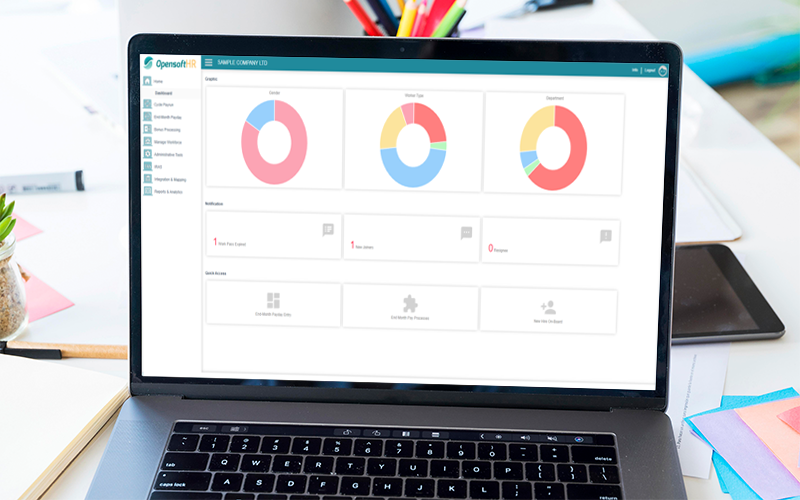
If spreadsheet work demands more checking than decision-making, review which HR processes create repeated effort. You can then prioritise changes around the processes that absorb the most administrative time each month. OpensoftHR brings payroll, e-leave, expense claims, time and attendance, employee self-service, and employee management into one integrated HRMS environment. That helps reduce separate trackers, duplicate updates, and unclear approval status.
Speak with us to identify which HR workflows create friction and simplify them with OpensoftHR.