Home
Home
Key Takeaways
- Repeated checking can signal that your HR setup is creating unnecessary work.
- Connected records make payroll, attendance, leave, and claims easier to manage.
- Careful migration planning protects data and supports smoother adoption.
- The right system should support current workloads and future growth.
Introduction
For many Singapore SMEs, switching HR systems becomes urgent when administration takes too much time. You may run payroll, approve leave, process claims, and update employee records, yet still spend time cross-checking whether information matches across different tools or files. The problem is not simply that the software is old. Scattered or duplicated information can make routine HR work harder to verify and control.
We see this turning point in construction, marine, and engineering businesses. Headcount may span office teams, site crews, foreign workers, and projects. As that structure grows, HR may end up depending on spreadsheets and manual follow-ups as workarounds to keep information aligned. That pressure is familiar to SME owners dealing with fragmented HR tools.
Old Systems Can Create Repeated Admin Work Over Time
An HR platform does not have to stop working before it becomes inefficient. The warning sign is the effort required around it. If your team updates a leave balance in one place, checks attendance elsewhere, then verifies payroll inputs manually, the system may create hidden work every month.
That is why switching HR systems should be treated as an operational decision, not a software refresh. We map where information is entered, checked, corrected, and approved. This helps your team identify recurring HR admin problems, such as repeated verification, duplicate updates, or unclear approval hand-offs. It helps you separate a process issue needing redesign from a system limitation forcing the same workaround.
For Singapore employers, record quality matters beyond convenience. MOM requires detailed employment records for employees covered by the Employment Act, including employee and salary information. Systems can make those records easier to organise and retrieve. MOM’s employment records guidance is a useful reference.
Disconnected Records Become Harder to Maintain as the Team Grows
Separate files can feel manageable when your workforce is small. Problems appear when an employee has different information across payroll, attendance, leave, claims, and personnel records. A salary adjustment may be updated in payroll but not the master record. An attendance correction may sit in an email thread while payroll preparation continues.
As headcount expands, HR becomes the human connection between systems. Your team spends time reconciling information instead of using it. Well-configured HRMS systems can reduce fragmentation by giving related HR processes a consistent structure. For example, an employee profile can serve as the main record for core details, while approved leave or corrected attendance is updated through defined workflows rather than separate files. The aim is not simply to centralise every task on one screen. It is to create reliable workflows where your team knows which record is authoritative and where each update should be made, so information is less likely to drift apart.
Switching Can Reduce Duplicate Data Entry
Duplicate entry is easy to recognise because your team feels it. Names, bank details, leave updates, attendance hours, claim amounts, and payroll inputs should not need to be re-keyed to move a process forward. Every extra entry adds time and another chance for a mismatch.
When switching HR systems, we look for workflows where one approved action supports the next step without unnecessary re-entry. A connected claim management system can help HR and finance follow approved claims through a clearer process. This reduces the need for manual follow-ups and makes it easier to keep related information consistent as a claim moves towards reimbursement.
The same principle applies during employee data transfer. Moving information is not enough. Your team needs to know which data is current, which fields are required, what should be archived, and how records will be checked before go-live. A cleaner migration reduces the risk of carrying old inconsistencies into the new environment.
Support and Migration Planning Matter During the Switch
A successful HR system migration needs more than a technical import. We plan around the people using the new setup: HR, managers, finance teams, supervisors, and employees. Each group has tasks and needs to understand what changes, what stays the same, and where to go when something looks wrong.
Good support should cover preparation, configuration, testing, user guidance, and post-launch questions. Before moving live, confirm employee profiles, leave balances, payroll information, claims, attendance records, approval rules, and access permissions. A staged review gives your team time to correct issues rather than discovering them during payroll.
A Better-Fit System Can Make Future HR Work Easier
The strongest case for switching HR systems is not that a new platform has more features. It is that your team can manage recurring work with less friction. As your SME grows, you need usable employee records, consistent attendance and leave updates, easier claims handling, and payroll inputs that managers and HR can review confidently.
Think beyond headcount. Will the system remain practical when you add projects, sites, reporting lines, or approval layers? Can managers see what they need without asking HR to pull information manually? Leave management software can give employees and managers a clearer way to submit, approve, and track leave without relying on separate spreadsheets or manual balance checks. What matters is whether those processes remain dependable as the business grows, without adding more spreadsheets or manual checks.
How OpensoftHR’s AI HR Assistant, AIME, Helps Teams Settle Into a New System Faster
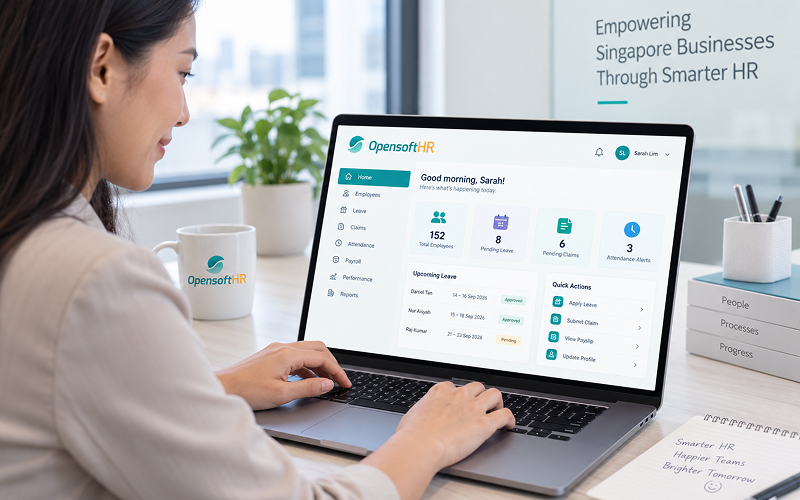
One cost of change is the wave of questions after launch. Employees want to know where leave balances sit, how to submit a claim, where attendance appears, or how to check a payslip. If every question goes to HR, the new system can create the workload it is meant to reduce.
AIME, OpensoftHR’s AI-powered Employee Self-Service assistant, helps absorb that demand. Employees can ask about their own leave, claims, attendance, and payslip queries directly on their devices. That gives them a faster way to find answers while reducing repeated questions for HR as everyone becomes familiar with the new workflow.
Switching HR Systems With Less Disruption and More Clarity
Before you change platforms, identify the admin work you want to eliminate, the records you need to protect, and the workflows that must become clearer. OpensoftHR supports Singapore SMEs with payroll, e-leave, expense claim management, time attendance, performance appraisal, and related HRMS capabilities.
As the HRMS arm of IT Infinity, which has operated for more than 30 years, we combine in-house R&D with customer support so SMEs can get clearer product and service guidance when implementation questions, configuration issues, or post-launch adjustments arise. This can make the transition easier to manage and reduce the troubleshooting burden on HR.
Speak to us about the workflows creating the most friction. We can help you assess what should change before migration and how a better-fit HRMS should support your day-to-day processes.