Home

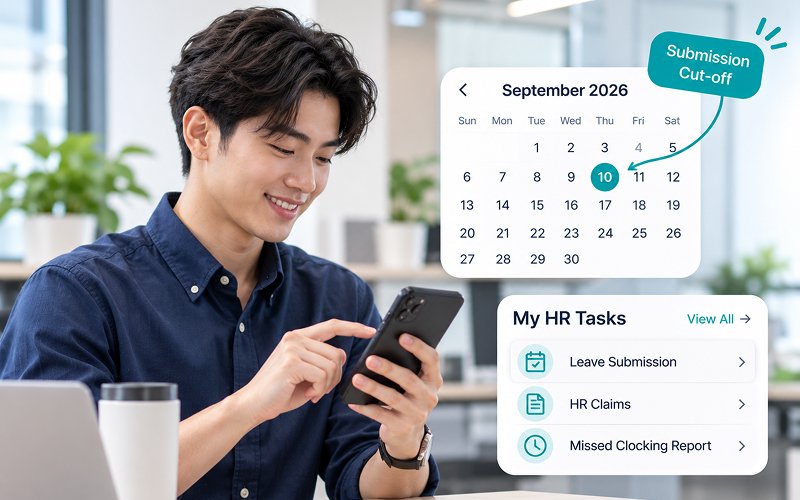
Key Takeaways
- Set clear cut-offs for payroll inputs, leave, claims, attendance corrections, and approvals.
- Connect related deadlines so one late update does not delay the next process.
- Give employees and managers time to act before HR starts final processing.
- Review recurring delays and adjust your monthly workflow where needed.
Introduction
For a lean HR team, HR cut-off dates create breathing room. Payroll changes, leave requests, claims, attendance corrections, and approvals rarely arrive together. Without a shared rhythm, small gaps become urgent chasers near month-end. We see fewer urgent follow-ups and more predictable approvals when SMEs treat cut-offs as part of everyday workflow design. You give employees a window to act, managers time to approve, and HR space to check information before processing begins.
1. HR Cut-Off Dates Reduce Last-Minute Chasing
Last-minute chasing often starts with uncertainty. An employee assumes a receipt can wait. A manager leaves an overtime approval until payroll week. Someone notices a missed clocking after HR begins checking records. Together, these gaps leave HR with less time to verify attendance, check payroll inputs, and resolve missing approvals before processing begins.
A clear cut-off schedule turns HR admin deadlines into shared operating rules. We recommend defining what must be submitted, who must approve it, and what happens when a date is missed. A claim received after the cut-off may move to the next reimbursement cycle. That is clearer than saying “send it before payroll”. HR can spend more time checking records and less time sending reminders. This also gives HR a clearer point to begin checks before payroll preparation starts.
2. Payroll, Leave, Claims, and Attendance Cut-Offs Work Better Together
The value of HR cut-off dates increases when related processes are coordinated. Payroll inputs may depend on attendance. Attendance may change after approved leave or overtime. Reimbursements depend on complete claim submissions and manager approval. With separate timelines, HR still has to piece together the final picture manually.
We map the sequence backwards from processing. Attendance corrections can close before payroll review. Leave approvals can be confirmed before records are finalised. Claims can be checked before reimbursement files are prepared. A connected attendance management system can support that sequence by centralising attendance records, approved leave, and corrections, so HR can review the information that feeds into payroll without piecing it together across spreadsheets, inboxes, and message threads.
Your payroll cut-off should be one point in a wider monthly workflow. Align each checkpoint with how your team actually works, rather than rescuing incomplete inputs at the end.
3. Employees Need Clear Submission Dates
Clear submission timelines answer practical questions. When should I submit my HR claims? When do I report a missed clocking? If I change leave after the cut-off, which cycle will reflect it? Keep instructions specific and easy to find. Tell employees what to submit, where to submit it, who approves it, and what happens if it arrives late.
Clarity makes accountability easier. Employees are less likely to see reminders as arbitrary when the same rules apply every month. For teams away from the office, mobile access matters too. People should not have to return to a desk simply to raise a correction or check an item.
4. Managers Need Time to Approve Requests Before Processing Deadlines
Employee submission is only half the workflow. A claim, leave request, overtime entry, roster change, or attendance correction may still be unusable until a manager reviews it. In SMEs, managers balance approvals with operations, so approval time needs to be built into the calendar.
That is why HR cut-off dates should include separate deadlines for employee submissions and manager approvals. If both happen on the same day, HR inherits the delay. We recommend an approval window after the employee cut-off and before final processing. Managers get time to act, HR receives confirmed records, and you reduce the risk of late decisions disrupting payroll, reimbursement, or manpower planning.
5. Regular Cut-Off Dates Make Monthly HR Work More Predictable
Recurring deadlines give monthly HR tasks a dependable cadence. Instead of treating payroll checks, claims review, attendance adjustments, and leave changes as separate emergencies, place them on one operating calendar. Workloads become easier to plan, while HR can see where delays keep occurring.
For Singapore SMEs, a payroll system can make recurring checkpoints easier to manage by helping HR review late attendance changes and confirm approved inputs before salary processing.
Those patterns are useful. If attendance corrections arrive just before payroll, employees may need an earlier reminder. If one team submits claims late, instructions may be unclear. If approvals keep stalling, managers may need a simpler view of pending actions. We can improve the process based on what repeats instead of adding more chasing.
Predictability also supports compliance. Singapore’s Ministry of Manpower states in its salary payment requirements that salary must generally be paid within seven days after the end of the salary period, while overtime pay must be paid within 14 days. A sensible payroll cut-off leaves time to review inputs before those windows become urgent.
How OpensoftHR’s AI-powered HR Assistant Helps Employees Meet Cut-Off Dates

Cut-offs only work when people know what is due and can act easily. AIME, OpensoftHR’s AI-powered Employee Self-Service assistant, helps employees submit and check their own leave, claims, and attendance queries from their devices. They can also ask when the next submission deadline falls, helping them act without waiting for HR reminders and reducing the risk of missed cut-offs.
For employees who are not usually stationed in the office, this access matters. A worker can act before a deadline instead of waiting for a paper form or for HR to respond. For lean teams, that reduces reminder traffic and helps information reach the workflow before processing starts. If you want to reduce repeated HR reminders and give employees easier access to cut-off information, explore how AIME can support employee self-service within OpensoftHR.
A Steadier Rhythm for Everyday HR Admin
Your next step is to map one month of HR activity, then give every submission and approval a clear owner, date, and consequence. Start with the processes that create the most chasing. OpensoftHR can help you bring payroll, leave, claims, attendance, and employee information into one workflow, giving HR clearer visibility over monthly cut-offs, pending approvals, and records that still need attention before processing deadlines.
If you are ready to reduce month-end chasing and create a clearer HR workflow, speak with our team to see how OpensoftHR can support your SME.